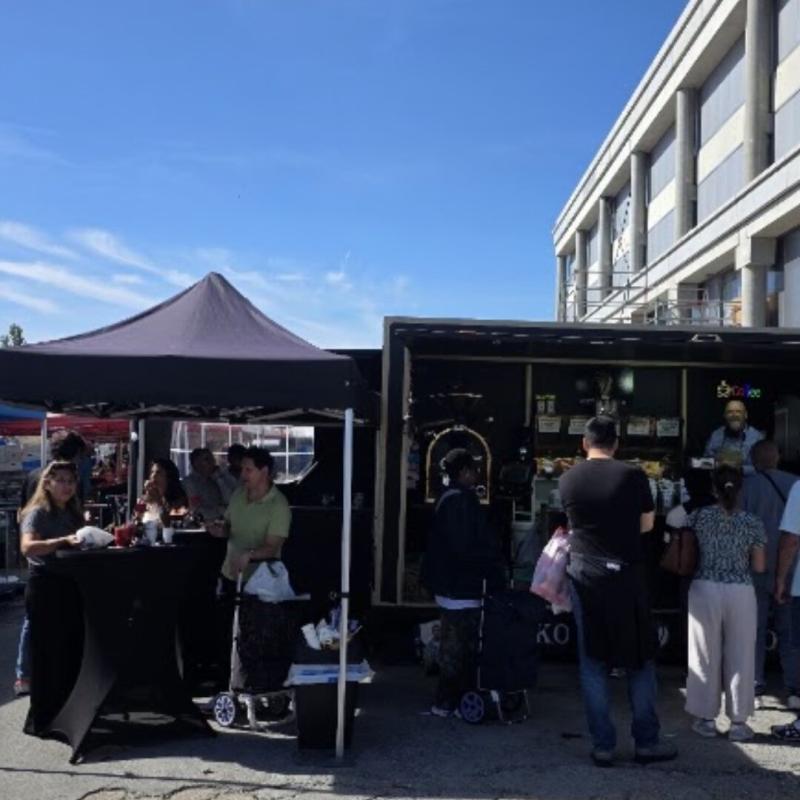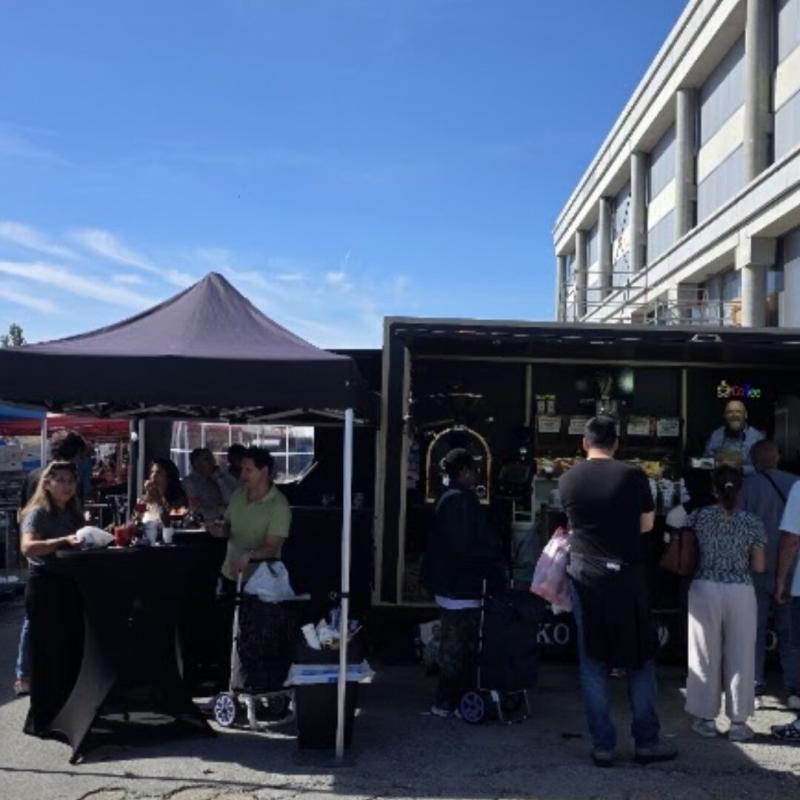
At 8am on Saturday, the air at Marché de l'Abattoir sat at 92% humidity. By 5pm it had dropped to 51%. On Sunday it stayed between 86 and 96% from morning to night, with drizzle spread over ten hours. Roasting coffee in humid weather is exactly that gap between two days: same sack, same man on the lever, two different fire settings.
Roasting coffee in humid weather: two days, one sack, different air
The numbers for the weekend of 12 and 13 September in Anderlecht:
- Saturday: high of 22.8°C, no rain, humidity falling from 92% to 51%, south-westerly wind gusting to 29 km/h;
- Sunday: high of 19.8°C, 1.3 mm of rain spread over ten hours, humidity between 86 and 96%, gusts of 30 km/h.
Saturday the air dried out from one batch to the next. Sunday it stayed heavy all day. Inside a closed, climate controlled workshop that gap disappears. Here it goes straight into the drum, because Golden works under open sky, at the exit of the Manufakture car park.
Roasting coffee in humid weather: what Laurent adjusted on the fire
A green bean carries 10 to 12% water. The first minutes in the drum pull that water out, and at 96% humidity the drying phase stretches at the same flame. First crack arrives later, and if the profile stays untouched the coffee comes out dry outside and underdeveloped inside.
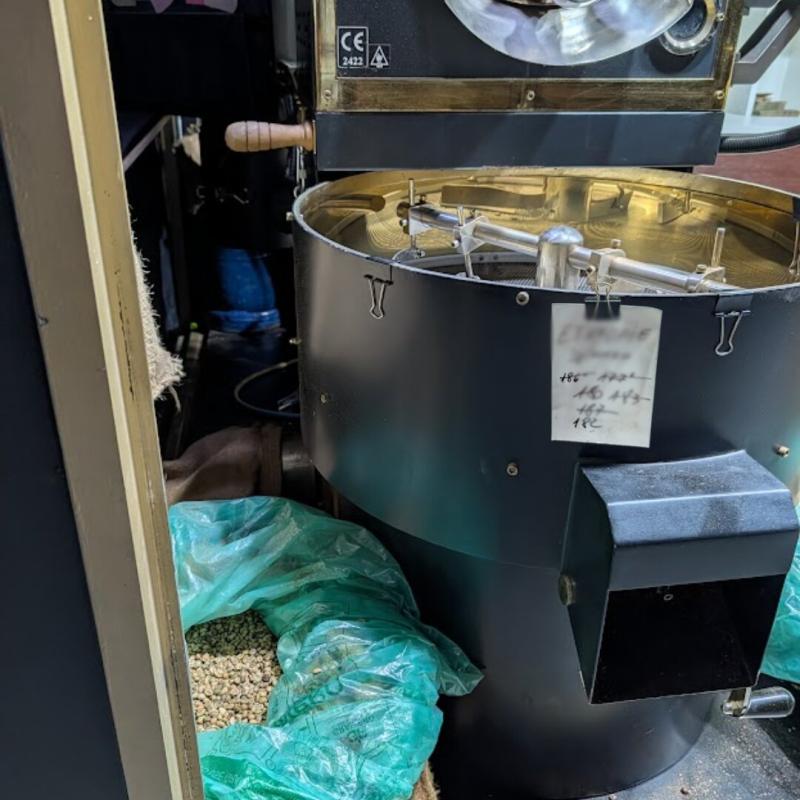
On Sunday, Laurent charged with more fire and held the drying phase longer, so the bean left its water stage before first crack. Then he cut the flame earlier than the day before, to stop development on time. Saturday afternoon ran the other way: dry air, a south-westerly pulling at the metal, less fire at charge and a hand on the lever every minute.
Golden rumbles and its smoke drifts toward the car park. The hand that moves the fire belongs to Laurent. The beans going through that drum this season are listed under our coffee.
Roasting coffee in humid weather: what to do at home with Sunday's bag
Roasted coffee pulls moisture out of your kitchen air, and a Brussels autumn supplies plenty of it. Three things worth doing this week:
1. Grind when you brew. Coffee ground the night before sits eight hours in a damp kitchen and shifts its extraction speed. A hand grinder costs you 20 seconds of work. 2. Keep the bag clipped shut, at room temperature, away from the sink and the window that fogs up. The fridge puts condensation on your beans every time you take the bag out. 3. Time the drawdown. On a V60: 15 g coffee, 250 ml water at 93°C, a 45 ml bloom for 40 seconds, the rest in two pours, target between 2:45 and 3:00. If it runs under 2:30 today on your usual setting, the beans have taken on moisture and deserve one step finer. Past 3:15, go one step coarser.
The test worth running at home: brew the same lot today and again in four days, same recipe, and write down the seconds. That difference in drawdown tells you more about your storage than any tasting note on the bag.
Which day your lot comes from: roasting coffee in humid weather, Saturday or Sunday
Every bag carries its roast date. This weekend two lots came off the same origin, one on Saturday and one on Sunday, taking two different routes to the same colour. If you want to taste the range side by side, three origins sit together in the Meteo Discovery Box.
You will find us on Saturday and Sunday at Marché de l'Abattoir, at the exit of the Manufakture car park in Anderlecht. Bring your drawdown time from home and compare it with ours at the stand. Laurent will tell you which day the bag you pick up comes from.
Brut. Sauvage. Imprévisible.