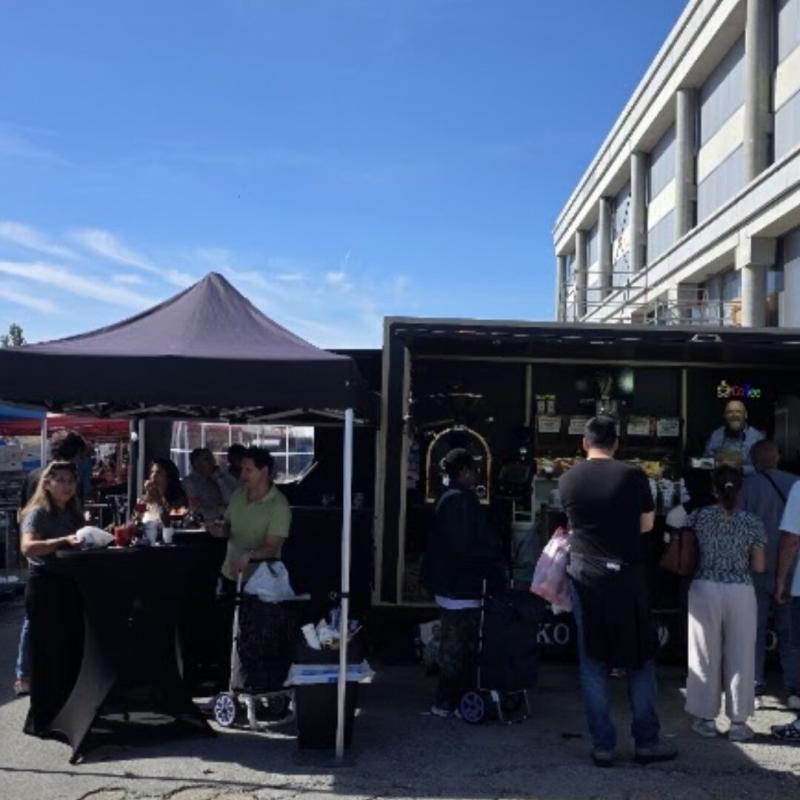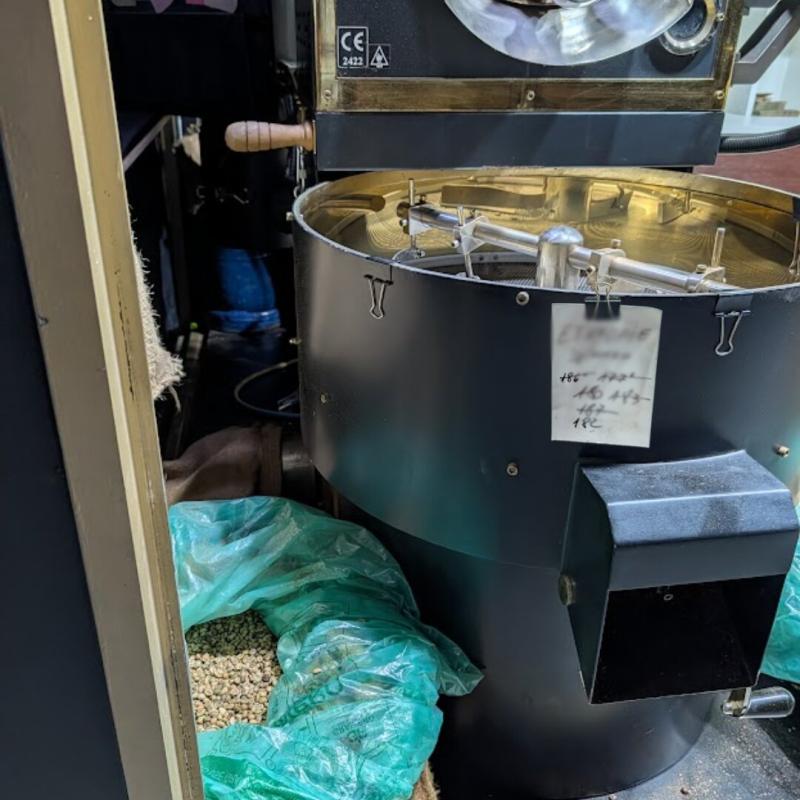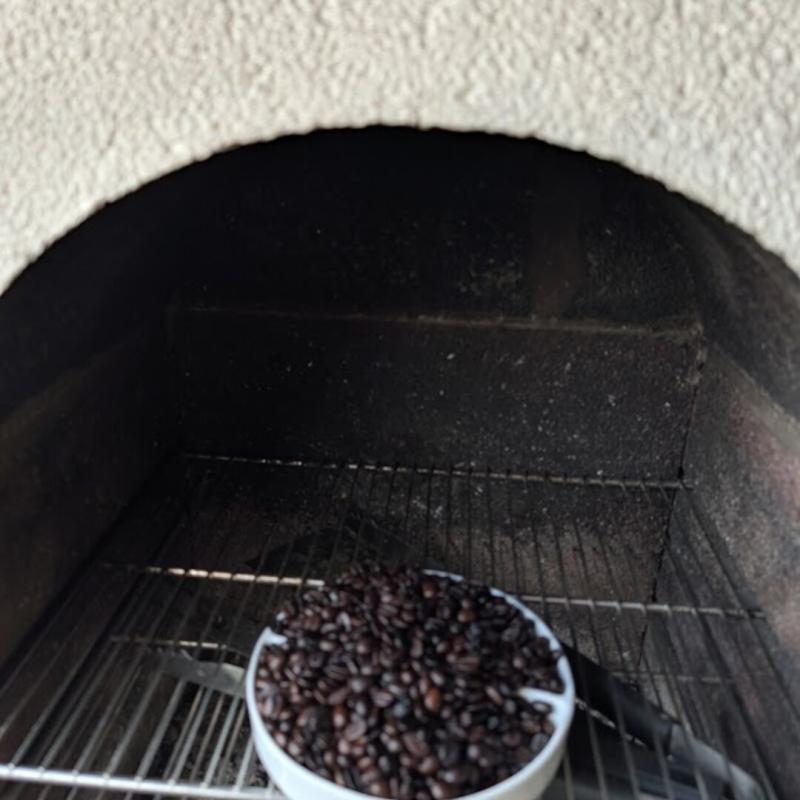
Saturday morning at the stall, a customer opened his bag, took one sniff and said a single word: chocolate. The jute sack had held nothing but green beans. The chocolate taste in coffee roasted in the open air is built during the roast, out of heat and time. Once you understand the mechanism, you buy coffee differently from then on.
Where the chocolate taste in coffee roasted in the open air comes from
A green bean smells of hay, raw peas and damp sacking. It carries two things that matter: sugars and amino acids. When Golden heats them together, they recombine and build aromas that were never in the bean to begin with.
The Maillard reaction makes the chocolate taste in coffee roasted in the open air
The reaction between sugars and amino acids under heat is called the Maillard reaction. The same one that browns a bread crust and the surface of a seared steak. Inside a coffee bean it works roughly between 140 and 170°C and produces three families of compounds:
- pyrazines: roasted notes, hazelnut, cocoa powder;
- furans and furanones: caramel, sweetness, baked bread;
- Strecker aldehydes, among them 3-methylbutanal: malt and milk chocolate.
Melanoidins form at the same time, the large molecules behind the brown colour of the bean and the sense of body in the cup. Above 170°C sugar caramelisation takes over, and around 196-200°C the bean cracks for the first time. The Maillard window is short, and its length decides how clearly the cocoa reads in your cup.
In Belgium almost everyone picks the cocoa note out straight away, it has been on the tongue since childhood. Put that to work when you taste: check first whether it reads as dry, powdery cocoa (pyrazines) or as milk chocolate, sweet and round (Strecker aldehydes). Two signatures from the same window, and the gap between them tells you how long the phase ran.
What Laurent does on Golden for the chocolate taste in coffee roasted in the open air
The Maillard phase is the part of roasting most exposed to outside air, and Golden works on concrete, by the exit of the Manufakture car park. The coming weekend looks different from one day to the next (Open-Meteo data for Anderlecht, pulled on 10 September 2026):
- Saturday 12 September: 12 to 21.6°C, wind 10.1 km/h, humidity 73%, 7% chance of rain;
- Sunday 13 September: 13.2 to 21.7°C, wind 16.4 km/h, humidity 80%, 55% chance of rain.
On Sunday the air is heavier and the wind stronger, so the drum sheet loses heat faster, right inside the Maillard window. Laurent reads the forecast before he lights the burner, pushes the fire a little and stretches the phase by a few dozen seconds so the window stays open long enough. Golden rumbles and smokes, the decision stays with Laurent. Two cups with different depths of cocoa come out of the same sack, which is the whole idea behind the Meteo Koffie experience. On roast level and what it actually changes, we went into detail in light or dark roast and the truth about caffeine.
The home test for the chocolate taste in coffee roasted in the open air
Three minutes and one cup:
1. Put 12 g of medium ground coffee in a cup and smell it dry. Those are the pyrazines, the dry cocoa powder smell. 2. Pour 200 ml of water at 93°C, wait 4 minutes, break the crust with a spoon and smell again. The sweet caramel notes come up now. 3. Taste at 60°C, then taste the same cup again after 8 minutes, around 40-45°C. Chocolate reads clearest in a cooled cup, once the acidity steps back.
When you buy, check the roast date on the bag. Cocoa notes settle after 4 to 7 days of degassing, and a one day old coffee gives you more gas than chocolate.
Ash or grass instead of the chocolate taste in coffee roasted in the open air
Ash, soot, ashtray: the roast ran too far past first crack and the melanoidins tipped over into bitterness. Grass, raw peanut, green pea: the Maillard window was cut short and the sugars had no time to recombine. Your grinder is innocent in both cases, look at the colour of the bean and the date on the bag first.
Saturday and Sunday we are at the Marché de l'Abattoir, by the exit of the Manufakture car park in Anderlecht. Ask to smell a green bean straight from the sack before it goes into Golden, then smell the full bag at the end. Three seconds separate hay from chocolate, and it stays with you. This weekend's lots are here, and the rest of the range sits in the shop.
Brut. Sauvage. Imprévisible.
(article: ~805 words)
---