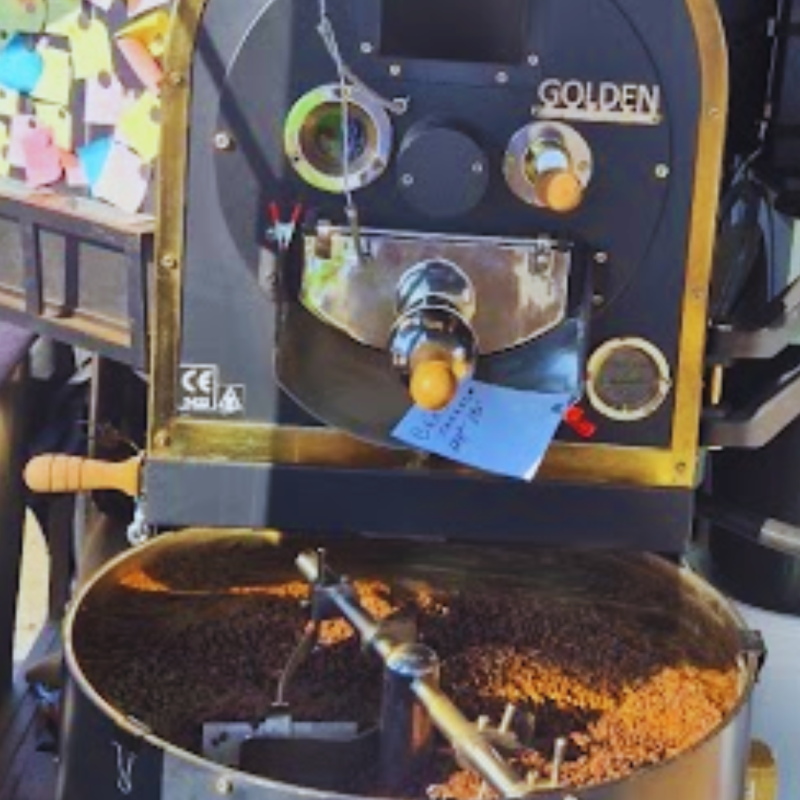
The bag you carry home on Saturday is nothing like the one off the shelf. How to store freshly roasted coffee — beans that came out from under Golden just hours ago, under the market's weekend sky — is not the same as storing coffee that's three months old. And this July, with its heavy, humid air, isn't doing you any favours.
Let's be honest. Brut. The way we roast.
Why our coffee asks for different rules
Supermarket coffee spent months in a warehouse. It's tired. Its freshness is already a memory, so storage tips are really an attempt to squeeze something more out of a burnt-out bean.
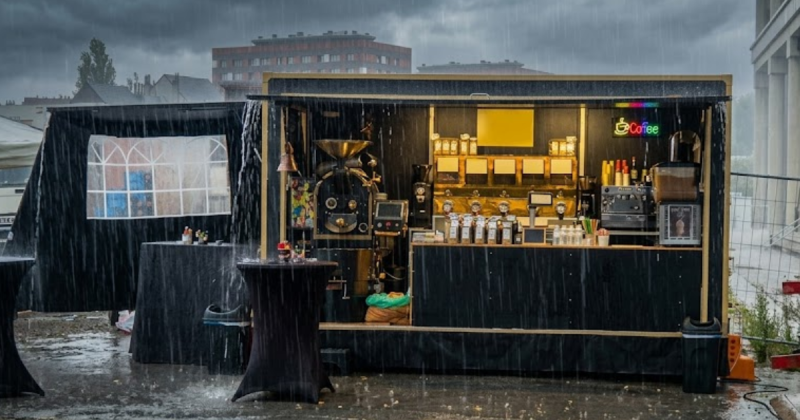
With us, it's the opposite. The lot you buy was roasted that weekend, in the open air, at the Marché de l'Abattoir, exit of the Manufakture parking, in Anderlecht. It's at its peak. That's exactly why it needs care — not to revive it, but to keep from spoiling what the sky wrote into it.
Every lot carries the date of one specific Saturday. That day's weather dictated its profile — the whole story of why lives in our open-air roastery and how the sky writes the recipe. Once it's home, you're the keeper of that day.
Degassing — the beans are still breathing
For a few days after roasting, the beans release carbon dioxide. It's called degassing, and it's the living sign that they're fresh. A slightly swollen bag isn't a defect — it's coffee breathing.
From that, a simple truth: freshly roasted coffee isn't always ready-to-drink coffee. A bean roasted today is alive, but it gives its best after a few days of rest. Give it three or four days after the weekend and it rewards you. It's also why we grind only to order — air is the enemy of ground aroma.
July's heavy air, the enemy in the kitchen
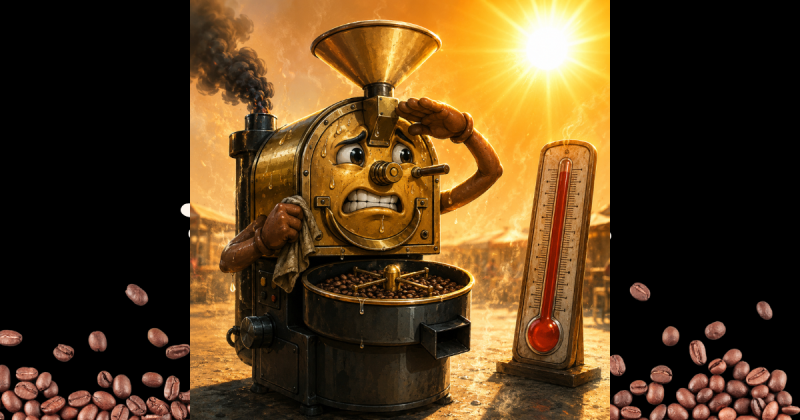
July 2026 in Brussels is running more than three degrees above normal, and toward the end of the month the heavy, humid air returns, with storms. Beautiful outside. Bad for coffee.
Humidity is the quietest thief of aroma. It creeps into the bean, dulls its precision, flattens it. In a Brussels kitchen in July, window open and the air heavy, a bag left open on the counter loses in two days what it would have kept for two weeks.
Three rules, no fuss:
- Whole beans, not ground. Grind when you drink. The surface exposed to air is the enemy.
- Airtight and opaque. Our resealable bag is built for exactly this — press the air out, seal it tight. Or a metal or opaque-glass container, away from light.
- Not in the fridge. Moisture and fridge odours seep into the bean. Keep it dry, cool, dark — a cupboard. The freezer only beyond a month, which, honestly, rarely happens.
Today's lot won't come back
This is the heart of it. Our lots are small and unrepeatable. Last Saturday's sky won't return, so neither will that coffee. Storing it well isn't protecting some beans — it's protecting one specific day at the market, its smoke, its wind, the hands that turned the metal.
Come get it fresh at the source. We roast and sell only on Saturday and Sunday, in the open air, at the Marché de l'Abattoir, exit of the Manufakture parking, in Anderlecht. See what's available now in our shop, or meet a single origin like our Ethiopia.
Those who know, know. Good beans don't wait.
Brut. Sauvage. Imprévisible.
---